Average Reviews:

(More customer reviews)Are you looking to buy Blades of Grass: The Stories of Lao She (Fiction from Modern China)? Here is the right place to find the great deals. we can offer discounts of up to 90% on Blades of Grass: The Stories of Lao She (Fiction from Modern China). Check out the link below:
>> Click Here to See Compare Prices and Get the Best Offers
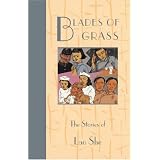
Blades of Grass: The Stories of Lao She (Fiction from Modern China) ReviewThis book was published in 1999 and contained 16 works by Lao She. There were 15 short stories and 1 essay.Lao She (1899-1966) has been called one of China's best modern writers. He's known for the novel Rickshaw (1936, also called Camel Xiangzi and Rickshaw Boy) and the play Teahouse (1957), among other works. He's also remembered for his insightful short stories, many of which contained humor and featured the townspeople of Beijing, where he was born and grew up. He was of Sinicized Manchu heritage.
Based on information provided by the co-translator of this work and an essay included by Lao She himself, it appeared that Lao began writing short stories around the early/mid-1920s and had published several large collections by the mid-1930s. After full-scale war with Japan broke out in July 1937, much of his work was written in support of China's war effort. Of his work after 1949, a compiler of another anthology has noted that it was written "in the Marxist style." So perhaps Lao's best--most literary--stories were from the period before the outbreak of war in 1937. In any case, all but one of the works in the present anthology were taken from collections between 1933 and mid-1937. The one later story was from 1943 and depicted a grasping art collector who became a collaborator.
For this reader, the two outstanding stories in the collection were "An Old and Established Name," a narrator's description of the decline of a store that couldn't adapt to the times, and "Neighbors," a depiction of a escalating squabble between householders. Both showed insight into human nature and were funny and sad at once. "A Grand Opening," about cynical men running a hospital for profit, was also darkly funny, though it felt as if the writer's good nature left him unable to come up with a suitably grim ending.
Not all the stories were humorous. "Rabbit" showed the author's ability to depict an artist caught up in the world of Chinese opera and eventually devoured by it. "Hot Dumplings" was a memorable vignette about an unhappy couple, and "Life Choices" showed a poor couple with a baby and felt as if it might've been based on the author's own life. Lao's humorous stories, however, were by far the liveliest for this reader, as well as the most concisely written.
Stories of other types included "Autobiography of a Minor Character," which described at length the narrator's surroundings when he was growing up in Beijing, and "Ding," which followed the thoughts of a boy visiting the seaside. The latter was called the author's only known experiment with the stream-of-consciousness technique and a very early example of it in modern Chinese fiction. The editor speculated that Lao might have been influenced in this regard by Dickens' use of the technique in David Copperfield, since Lao was a great admirer of Dickens, or might have been exposed to the literature of Joyce and Woolf while living in London in 1924-29.
Another collection by Lao She is Crescent Moon and Other Stories, by Panda Books of China. "Grandma Takes Charge," a good satirical tale by the author not included in Blades of Grass, appeared in Voices of Modern Asia and Treasury of Modern Asian Stories.
Some excerpts:
"I remember our old neighbour, Young Qiu. By now the 'Young' Qiu of those days is naturally 'Old' Qiu. But even if I were to meet him now, even if he were already a hoary old man, I would still call him 'Young' Qiu. For me, he could never grow old. When we imagine flowers, what springs to mind are blooming red flowers and lush green leaves, not faded blooms that have lost their fragrance and are dropping their petals like rain. It was the same with Young Qiu. In people's minds, he was forever in the springtime of life, though he looked nothing like a flower."
"His face began to look like a dumpling that had split apart while boiling."
"Mrs. Ming was barbaric, and wrangling with a barbarian would demean one's social status. But his wife wasn't willing to let it go at that and insisted that he wreak some sort of vengeance on her behalf."
"The next day was Sunday. Mr. Yang was in the yard cleaning up his garden. Mr. Ming was inside his house repairing the windows. It seemed that the whole world was at peace, and mutual understanding had finally come to mankind."
"After I became a grown man, I once visited the Forbidden City. Red walls followed red walls, the great halls faced each other. Everywhere one ran into walls, and everywhere It was neat and orderly. It was stately and dignified, all right, but I really doubt that the crown prince had ever seen a pumpkin vine growing on a screen wall."
"Even though what we possessed didn't relieve us from our poverty, it did provide us that stability that made each blade of grass and each tree come alive in our hearts. At the very least, it made me a small blade of grass always securely rooted to its own turf. All that I am began here. My character was molded and cast here."Blades of Grass: The Stories of Lao She (Fiction from Modern China) Overview
Want to learn more information about Blades of Grass: The Stories of Lao She (Fiction from Modern China)?
>> Click Here to See All Customer Reviews & Ratings Now

0 comments:
Post a Comment